
Hearing the “Voice” of God

How many times have you heard someone say “God told me to  (fill in the blank) “?  I am not talking about the crazy person who says that God told him to blow up a day care center.  It is easy to dismiss those claims as psychotic nonsense.  I am talking about the seemingly normal, everyday person who happens to be a Christian.  Most of us have probably heard someone say this.  Most of us may have even said these words ourselves.

Here is an example:  When I decided to go leave my career in technology sales and enter seminary, many people asked why I would make such a decision.  My answer?  Because I believed that was what God was telling me to do.  But how could I be sure?  It is not as if God spoke in an audible voice and said, “Tim, I want you to leave your career, sell your home and move from beautiful Ohio to the land of your sworn enemy, Michigan.”  I received no phone call from God.  I received no visions in the night.  God did not speak to me from a burning bush.  But I still believed that God was “speaking” to me and telling me that I should enter the ministry as a pastor.  I believe he spoke to me through others who encouraged me to go to seminary.  And he spoke to me by developing a desire within me to go.

But how can we be sure?  How do we KNOW that we are hearing the voice of God and not simply following the advice of others or our own passions?  After all, the Bible tells us that we are all sinful and our desires and passions are not the same as God’s.  Jeremiah 17:9 tells us that “The heart is deceitful above all things, who can understand it”.  If this is true, how can we know if we are not just following our own deceitful hearts when we think we are listening to God?

To make matters worse, we not only have to deal with the deception of our own hearts, but also the deceptive work of Satan.  Scripture tells us to be watchful because our “adversary the devil prowls around like a roaring lion seeking  someone to devour” (1 Peter 5:8).  This would not be so bad since, while lions are ferocious and dangerous, at least we can spot them easily and stay away from them.  Unfortunately, this is not the case with Satan.  We are told that he presents himself as an “angel of light” and that his servants present themselves as “servants of righteousness” (2 Corinthians 11:14-15).  That means that we cannot easily spot trouble.  In fact, Satan and his servants can seem like they have our, and God’s, best interests in view when they “help” us.  Just look at Satan’s deceptiveness in the Garden of Eden as an example (Genesis 3:1-7).

So, we can see why it can be so difficult to “hear” God.  We have an enemy who would like to deceive us and our own hearts are untrustworthy.

Fortunately, God has left us with more than subjective ways to understand his will for our lives.  He has left us with his word.  Scripture expresses the will of God for all of mankind in written form.  2 Timothy 3:16-17 tells us that “All Scripture is breathed out by God and profitable for teaching, for reproof, for correction, and for training in righteousness, that the man of God may be competent, equipped for every good work.”  Scripture is the word of God.  It is sufficient to teach us concerning the will of God and equip us to serve him.  The best thing about Scripture is that it is not based upon subjectiveness.  It is the objective word from God.  We can have confidence in it.

What does this mean for us?  It means that Scripture has final authority in all matters.  While we may get a feeling that God is speaking to us either through our own gut or through the counsel of others, we must always test those “voices” through the voice of Scripture.  God’s true voice will never contradict what he has said in his written word.  In fact, we are told to oppose those who contradict God’s written word (Titus 1:9).

So, when we desire to know God’s will about a matter, the first place to turn is the Bible.  When we feel that God is telling us to do something, the first thing we should ask ourselves is “What does Scripture say about this?”.  Often times, there will not be a direct answer in Scripture, but there are always principles to apply to our circumstances.  This is why it is so important for the Christian to constantly study God’s word.  The more we study it, the more we are able to understand the will of God and live it out in our everyday lives.  The more we understand God’s word, the better equipped we will be to perceive the deceitfulness of Satan and our own hearts.  If we want to hear the voice of God, there is no better place to listen for it than in the word he saw fit to write down for us.  If we neglect it, we have no idea whose “voice” we follow.
Posted in Bible, Church Issues, Worldview | Tagged , , , , , , , , , , , , , | 14 Comments

Please stop saying “And a little child shall lead them”…

Okay, for the millionth time, I have heard someone say “And a little child shall lead them” out of context.  Today it happened on the news as I heard the story of a young boy who is raising money for a children’s charity.  The newscaster praised the young man for his efforts, which was a wonderful gesture.  At the end of the segment, another newscaster commented on the maturity and kind heart of the boy and then said to everyone watching: “And a little child shall lead them.”  In the context of the newscast, this statement meant that adults can learn from the leadership of a child.  Or, that in some way, the leadership of a child is superior to that of adults.

Now, I am not denying that this boy is a fine example to us all and that we would do well to follow his lead in being more concerned about the needs of others.  However, I am startled at how often the phrase “And a little child shall lead them” is taken completely out of context.  The original quote has nothing to do with children teaching or leading adults.

First, you have to understand that the phrase is actually a quote from the Old Testament.  It comes from Isaiah 11:6, which reads:

The wolf shall dwell with the lamb, and the leopard shall lie down with the young goat, and the calf and the lion and the fattened calf together; and a little child shall lead them.

As you can see right away, the text has nothing to do with a child leading adults.  It states that a child shall lead the wolf, lamb, leopard, young goat, calf, lion, and fattened calf.  This may seem strange if we do not continue to read a few more verses to get a better understanding of what is being discussed here.  Verses 7-9 continue:

The cow and the bear shall graze; their young shall lie down together; and the lion shall eat straw like the ox. The nursing child shall play over the hole of the cobra, and the weaned child shall put his hand on the adder’s den. They shall not hurt or destroy in all my holy mountain; for the earth shall be full of the knowledge of the Lord as the waters cover the sea.

This passage is a discussion of the Day of the Lord.  This is the day that Christians look forward to when Jesus Christ will remove the curse of sin from our world and restore peace to all of creation.  As a result of this peace, wolf, lion, lamb, cobra, calf, bear, and children will all live in harmony.  A child will be able to lead a lion (or a wolf, etc.) around without fear of harm.

Let us stop using this phrase as if the Bible tells us that children will one day lead adults.  It says nothing of the sort.  If we are going to quote Bible verses, let us quote them in context.  Isaiah 11:6-9 is a wonderful passage that describes what God has in store for this fallen world that has so much violence, fear and death.  It will be a world of peace.

Posted in Bible Study, Culture | Tagged , , , , , , , , , , , | 10 Comments

Free Book from John MacArthur

Okay, so I have not posted in a few weeks.  I realize that this is no way to maintain my readers, so I do apologize.  I am trying to do better, but responsibilities at my new ministry take up much of the free time that I once had.  Hopefully, I can start doing a better job with this blog.

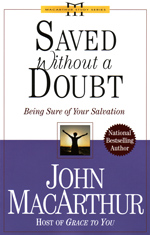
In the meantime, I came across a free book offer from John MacArthur.  The book is Saved Without a Doubt, and it is available by going to the Grace to You website.  The book is available for free to anyone who requests one by Wednesday, July 28, 2010.  One free copy per person.

I hope you enjoy.

Posted in Bible Study | Tagged , , , , , , , , , , , , , | 3 Comments

College Students Care Less

A new study from the University of Michigan (if you can trust such a source) shows that college-age students show less empathy today than in previous years.  USA Today reports:

Sara Konrath, a researcher at the university’s Institute for Social Research, looked at 72 studies that gauged empathy among 14,000 college students in the past 30 years. She found that empathy has been declining — especially since 2000. The research finds that college students today show 40% less empathy vs. students in the 1980s and 1990s. The students are less likely to agree with statements such as “I often have tender, concerned feelings for people less fortunate than me” and “I sometimes try to understand my friends better by imagining how things look from their perspective.”

 The study did not evaluate why students are less empathetic, but Konrath says one reason may be that people are having fewer face-to-face interactions, communicating instead through social media such as Facebook and Twitter.

This is an interesting study, especially when we begin to consider the possible causes.  Is it Facebook and Twitter?  Is it the erosion of the family over the years?  Is it something else?  Read the report in USA Today and let me know what you think.

By the way, if you are older and think that this does not impact you in any way, consider these words from the article:

If people are less empathic, she says, it has implications for America’s aging population, because older people will increasingly rely on younger generations for support and care.

“Empathy is a very important moral trait in terms of everyday caring for people in our environment,” she says.

Posted in Culture | Tagged , , , , , , , , | 5 Comments

Which of these Common Sayings are Found in the Bible?

I recently quizzed my congregation on their knowledge of the Bible by asking them which of the following sayings are direct quotes from Scripture:

1.  Moderation in all things.
2.  Spare the rod, spoil the child.
3.  Do unto others as you would have them do unto you.
4.  God helps those who help themselves.
5.  Money is the root of all evil.
6.  Cleanliness is next to godliness.
7.  This too shall pass.
8.  God works in mysterious ways.
9.  The eye is the window to the soul.
10.  The lion shall lay down with the lamb.
11.  Pride comes before the fall.

What do you think?  Which are directly from the Bible and which are not?  You will find the answer as the first comment to this post.

Posted in Bible | Tagged , , , , , , | 4 Comments

Geocentrists Still Exist

I am re-reading a book by one of my former seminary professors.  The book is Don’t Stop Believing and it deals with how Christian belief and action go together.

In chapter one, the author makes the point that the more we learn about God’s world, the better we can understand his word.  He goes on to say that many Christians living prior to Copernicus (who discovered that the earth revolves around the sun) took Psalm 93:1 as a statement that proved that the earth was the center of the universe.  Psalm 93:1 reads, “Yes, the world is established; it shall never be moved.”  However, since Copernicus’ discovery, most Christians “read Psalm 93:1 not as a scientific description of the earth’s immovability but as a poetic promise of God’s provision for his creation…”

Interestingly, the author mentions that there are still a “few dinosaurs” (describing those who believe the earth is the center of the universe) that exist.  I recently met a geocentrist and can personally vouch for the truthfulness of my former professor’s statement.  My geocentrist friend even used Psalm 93:1 as his proof that he was correct.  I was so surprised at what I was hearing that I did not know how to respond.

I also found it interesting that this same person was “King James only”.  He pretty much thought I was an instrument of Satan sent to the church where I was a guest speaker to lead people astray.

Have you ever met a geocentrist?

Posted in Bible, Christianity, Culture | Tagged , , , , , , , , , , | 7 Comments

God has Created. God has Spoken. God has Acted.

First, let me apologize for not writing for some time.  I have been busy settling into my new ministry.  As I get into more of a routine, I will begin posting more regularly (probably 1 or 2 times per week).

I have been reading through the book Basic Christianity by John Stott, which I am considering for use in a new member’s class.  As I read the opening chapter, I found some very good thoughts from Stott that I wanted to share.  We often talk of religion as mankind’s search for God.  However, in Basic Christianity, Stott tells us that the Christian worldview has a different perspective.  He writes:

…Before man stirs himself to seek God, God has sought man. In the Bible, we do not see man groping after God; we see God reaching after man.

…The Bible reveals a God who, long before it even occurs to man to turn to him, while man is still lost in darkness and sunk in sin, takes the initiative, rises from his throne, lays aside his glory, and stoops to seek until he finds him.

…He has taken the initiative in creation, bringing the world into existence. …He has taken the initiative in revelation, making known to mankind both his nature and his will. …He has taken the initiative in salvation,coming in Jesus Christ to set men and women free from their sins…

…God has created. God has spoken. God has acted. These statements of God’s initiative in three different spheres form the summary of the religion of the Bible.

Is this how you think of the God of the Bible and Christianity?  Is it about God’s efforts to reach down to us, or is Christianity our effort to find God?

Posted in Worldview | Tagged , , , , , , , , , , | 3 Comments

Defining “Missions”

A couple of days ago, a friend and former student of mine asked me for my understanding of missions.  He acknowledged that the question was a bit vague, but it was his intent to leave the question in broad terms.

When I considered the question, I realized that it was probably best to respond with broad principles rather than get into specifics.  I base my understanding of missions on Matthew 28:19-20, which is commonly referred to as “The Great Commission”.  While I believe the passage has been somewhat misunderstood (with too much emphasis on the word “go”), I do believe it summarizes the purpose of the Church (i.e. to “make disciples” through “baptizing” and “teaching”).

Here is my response to my friend:

– The mission of the Church (i.e. all believers) is to baptize (i.e. evangelize) and teach (i.e. disciple) – Matthew 28:19-20.
– I do not believe that missions is supposed to be done solely by “professional” missionaries, but every believer as he/she lives their daily life. We should all be witnessing to those around us in word and deed every day.
– Missions is not just about evangelizing the lost, but also discipling new believers to Christian maturity.

– Biblical mission is not concerned with sending people somewhere else to testify about Christ, but about having the people of God testify right where they are.
– I believe that mission is more inclusive than only being concerned with the souls of people. We are to care for the entire person – physical needs, emotional needs, spiritual needs. As we do this, we demonstrate Christ’s love in action and gain an opportunity to tell of Christ’s love in word.

I admit that my responses are not exactly thorough, but when you ask a vague question you have to expect a vague answer!  My greatest concern is that we talk a great deal about missions in our churches today, but we seem to talk about it as something that others do and that we support through financial gifts or periodic “mission trips”.  Do we think of missions as the heart of what every church and every individual believer is supposed to be doing?  How does your local church think of missions?  How do you think of your role?

Does your church have a mission strategy that includes care for the entire person or is it only concerned with the spiritual?

Posted in Missions | Tagged , , , , , , , | 11 Comments

A New Beginning…

Tonight, my family spends its last night in Ohio.  Tomorrow morning, we load up our moving truck and head to our new ministry in a small town outside of Kalamazoo, Michigan.  Rachel and I are very excited about what lies ahead and we are anxious to get to know our new church family.

As I have begun to think through the details of stepping into a new church ministry as a senior pastor, I realize that there are many expectations concerning what a pastor needs to do in his first days.  Some of the expectations come from others, some come from the pastor himself.  Some of the expectations are legitimate, others are not. 

Even the best books on ministry disagree with each other on what a pastor should do in his first days.  Some say that a pastor should do little or nothing in the area of making changes in the first year of ministry.  Others say that the best time to make changes are in the first days when people are expecting change (because of a change in leadership) and when the pastor is still in the “honeymoon” stage.

What are your thoughts?  Have you ever gone through a pastoral change in your church?  What would/did you expect from your new pastor?  Have you had any positive or negative experiences that you could share?

Posted in Church Issues | Tagged , , , , , , , | 10 Comments

If you could ask God for one thing…

I am preparing a sermon and need your input.  All you have to do is respond to the following question:

“If you could ask God for one thing (and only one thing), what would you ask for?”

Leave your response as a comment.  Thanks!

Posted in Bible, Bible Study, Culture, Worldview | Tagged , , , , , , , , | 10 Comments